
Scaling Use of Health Data: A Decentralised Approach
Project Description
The Scaling Use of Health Data: A Decentralised Approach project funded by the Gates Foundation (GF) in partnership with The Health Foundation (THF), Western Cape Government Health and Wellness (WCGHW): Metro Health Services (MHS), Health Intelligence (HI) and Emergency and Clinical Services Support (ECSS) together with the City of Cape Town (CCT) aims to support data-driven sub district/substructure level interventions to improve TB and HIV outcomes in the Western Cape (2023-2026). The project aims to contribute to the efforts of the WCGHW and CCT’s Health Directorate to achieve the best possible health outcomes for the population of the Western Cape, particularly for TB and HIV.
The current project builds on work undertaken in the Western Cape as part of phase 1, 2020 – 2023, which aims to increase effective data utilisation to improve TB, HIV and diabetes outcomes. However, scaling of the data use cases to improve linkage and retention in care was impeded by the state of readiness of the tools developed by the PHDC and data access challenges. Significant strides have been made with the piloting, iterative improvement and increasing access to these tools during the previous grant period. Several tools are ready for scaling to impact patient outcomes, and we are now positioned to realise the full benefit of the data systems that have been established.


The goal, aims and objectives in the current grant proposal align with the provincial ambitions outlined in Healthcare 2030 which is intended to enhance the health systems responsiveness to people’s needs and expectations; with careful consideration given to person-centeredness, providing integrated, continuity of care over the life course, and ultimately, to achieving universal health coverage.
The Scaling Use of Health Data: A Decentralised Approach grant supports targeted activities in the Cape Metro District which encompass Metro Health Services, the City of Cape Town Health Directorate and one sub-district in Rural Health Services.
Goals/Outcomes
The overall goal of the Scaling Use of Health Data grant is to improve patient care and contribute to the efforts of the Western Cape Government’s Department of Health and Wellness and the City of Cape Town’s Health Directorate to achieve the best possible health outcomes for the population of the Western Cape, particularly for TB and HIV, within a financially constrained environment.
It does this by supporting interventions that drive more effective, efficient, data-driven TB and HIV decision-making at the subdistrict and substructure levels.
Five interlinked objectives

1.
To increase the use of aggregate and person-level data to improve TB and HIV outcomes in the subdistrict/substructure.
2.
To establish a learning health system, with quality improvement embedded within management systems and processes.
3.
To improve linkage and retention in care for People living with HIV (PLHIV) by optimising implementation of differentiated models of care and the use of Health Technology Assessment Laboratory (HTAL).
4.
5.
What’s new?
Essential to the grant is empowering healthcare providers to know their data, interrogate their data, and act on their data. In Phase 1 of this work, the focus was on developing the tools to enable data use. Currently the focus has been on establishing routine use of these tools to improve patient outcomes.
In six selected sub-districts (Khayelitsha, Eastern, Mitchells Plain (MHS), Klipfontein, Tygerberg (CCT) and Drakenstein (RHS)), the partners have focused on driving implementation to demonstrate impact and identify best practices for broader scale-up.
The four key focus areas are: TB testing, including the implementation of Targeted Universal TB Testing (TUTT); hospital and PHC linkage to TB care; and six multi-month anti-retroviral dispensing (6MMD).
The seconded teams focused on capacitating district and sub-district management and support staff teams to access and interrogate data, oversee clinical governance, and support quality improvement at the facility level.
To support the province the grant undertook the following:
- Differentiated models of care (DMOC) mapping report
- TB education and counselling videos
- Knowledge, Attitude and Practices (KAPs) Surveys
Interventions and Activities
Communication and dissemination
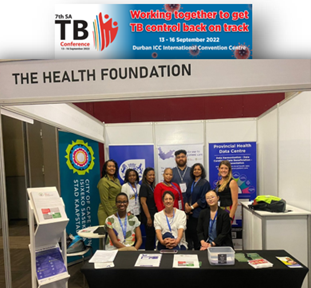
Co-creation of activities and sharing of challenges and best practices across the partners and teams were undertaken through participation in webinars and conferences. These activities share learnings and best practices of the project within and beyond the WC and included:
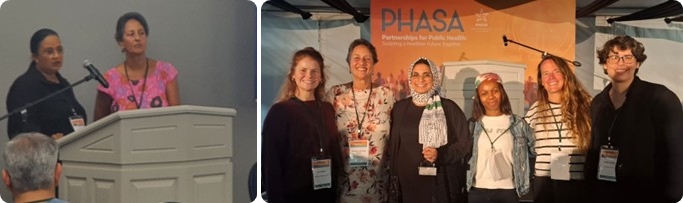
The 16th Aids Impact Conference, in Casablanca, Morocco 26 – 28 May 2025 a presentation on ‘Differentiated Models of Care (DMOC): Tailoring Services for People Living with HIV’ was presented.

SA HIV Clinicians Society Conference 20 – 22 August 2025 where the “100 Facilities” project was presented as an example of effective collaboration and embedding of QI methodology”.

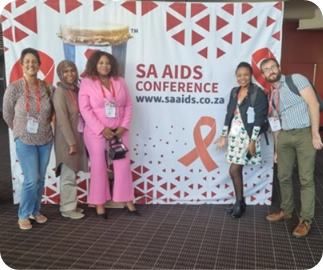
SA AIDS Conference held from the 8 – 11 September 2025 partners presented on “The Use of Health Information Systems to Strengthen HIV Interventions”.
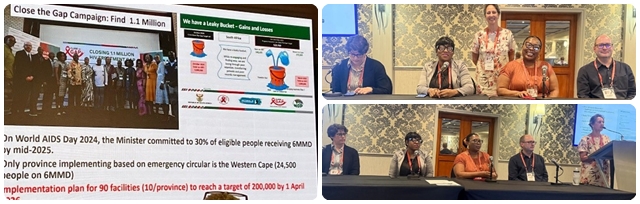
Global Summit Quality Month Summit – 13 November 2025. Team members participated at the Global Quality Summit with the theme, “Quality: Think Differently” where they showcased some of our interventions and the PHDC tools at the exhibition space.
The partners attended the following conferences where they participated in satellite and plenary sessions.
The 8th TB Conference with the theme ‘Accelerating progress to end TB’ was held the 4-7 June 2024 at the Durban ICC.
The 25th International AIDS Conference titled “Put People First!” was held from 22-26 July 2024 in Munich Germany.
World Congress of Epidemiology focused on the theme “Epidemiology and complexity: challenges and responses” and was held September 24-27- 2024 in Cape Town.
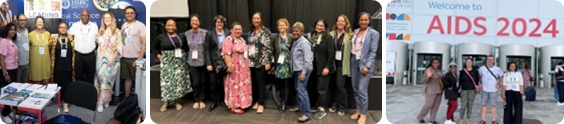
South African Aids (SA AIDS) Conference in Durban, South Africa: 20 -23 June 2023. THF and partners coordinated and participated in a satellite session titled, “Health Systems Strengthening through Information Management” at SAAIDS.
Public Health Association of South Africa’s (PHASA) Conference, Gqeberha, 10– 13 September 2023. The grant team held a participatory session titled: QI as part of routine practice in CCT and MHS: What has worked, what are the challenges and strengthening initiatives?
15th AIDS Impact Conference was held in Stockholm, Sweden from the 12 –14 June 2023. The teams participated in a joint roundtable with the Human Sciences Research Council (HSRC) titled, “Implications of COVID on patient care and access to services” AIDSIMPACT.
The Union World Conference on Lung Health – Paris, France – 15-18 November 2023, a representative of the City of Cape Town: Health Department in collaboration with partners prepared an abstract: Rethinking reporting on TB outcomes: An urgent need to refine our programmatic monitoring and evaluation.
Reports and Health Literacy
Reports
Data Access, Flow, and Use in City Health Primary Healthcare: Situation Analysis (CCT)
Scaling Data Use: RHS (Drakenstein)
Metro Health Services Situational Analysis – September 2022
Differentiated models of care (DMOC) mapping report
The grant has supported the implementation of differentiated models of care to meet HIV patients’ diverse needs while responding to resource constraints and national priorities. Combined efforts to improve retention in care, including through DMOCS, have seen a small reduction in the percentage of patients lost to follow-up (-5%), contributing to increasing percentages of patients on ART.
To improve RIC for PLHIV, grant partners undertook a situational analysis (mapping exercise) of PLHIV on ART receiving different DMOCs in the focused facilities of the grant in the Cape Metro. This analysis aimed to document DMOC modalities, i.e., what DMOC options are currently being offered, why these were selected, and how these DMOC options are being implemented. The findings complement the quantitative data currently available.
One of the key outcomes was a DMOC Mapping Report which shares the information gathered in targeted facilities supported by the Scaling data use grant across the Cape Metro. These DMOC models provide a variety of efficient, sustainable and patient-centred health services, aiming to improve coverage and retention in care while achieving greater cost-effectiveness than the standard models. It documents ART chronic care DMOC interventions. The aim was to understand what DMOC options facilities currently offer, why they selected these specific models, how they implement them and the barriers and enablers to implementation, so as to guide the kind of support the grant can provide to strengthen DMOC.
Below for more information the link to the report:
Read Report
Supporting clinical governance in the Western Cape: HIV and TB sentinel indicator reports
Health Literacy
TB education and counselling videos
In the Western Cape, newly diagnosed TB clients in primary healthcare facilities usually receive one to three counsellor or nurse-led education sessions post-diagnosis. However, with counsellors being relocated out of facilities, the responsibility for this education is now falling solely on already overburdened clinicians. TB education and counselling videos were produced by the grant in 3 languages and are being piloted for use in Western Cape clinics in consult rooms to save time and augment counselling, in waiting areas to build awareness, for patients to watch at home via shared links, for community health workers to use in the field and for general public dissemination and awareness raising
English
YouTube: https://www.youtube.com/watch?v=SaExkxIVFz4
Vimeo: https://vimeo.com/1138555848?share=copy&fl=sv&fe=ci
Afrikaans
YouTube: https://www.youtube.com/watch?v=By8KPrpAZnY
Vimeo: https://vimeo.com/1138561716?share=copy&fl=sv&fe=ci
isiXhosa
YouTube: https://www.youtube.com/watch?v=jq6OPJxI-jo
Vimeo: https://vimeo.com/1139273631?share=copy&fl=sv&fe=ci
Dissemination of Key Grant Outputs
Case Studies and Surveys
Executive Summary | Scaling Use of Health Data: A decentralised approach
Case Studies from Scaling Use of Health Data: A decentralised approach
These case studies were documented over the Scaling use of Health Data implementation period. They
record what worked, where, and what it would take for similar interventions to succeed elsewhere.
View PDF | View Flipbook
Consolidated Change Package: Embedding Targeted Universal TB-NAAT Testing (TUTT) into Routine Facility Workflows
View PDF
Improving Linkage to Primary Health Care for hospital-diagnosed TB clients
View PDF
Rural Health Services: Drakenstein Case study: Quality and patient outcomes
Knowledge, Attitude and Practices (KAPs) Surveys
The Knowledge, Attitude and Practices (KAPs) baseline, midpoint and endpoint surveys undertaken between October 2021 and October 2024 aimed to develop an understanding of people’s use of electronic health information systems by tracking changes in knowledge, attitude, and practices over the duration of implementation of the project. The survey results were used by the Western Cape Department Health and Wellness (WCDHW) and City Health Department to inform training needs and how to improve the use of electronic health systems to enable better patient care. The endpoint results has shown a significant increase in SPV usage since the midpoint survey with SPV now being the second most used electronic health system for WCDHW and Metro Health Services.
Below for more information on the surveys:
Single Patient Viewer (SPV) Training Resources
The SPV platform provides users with seamless access to reports and digital tools at their fingertips, enabling efficient data access and use to improve patient outcomes.
How to start
Click on the link below to get started:
Getting started with the Single Patient Viewer
How to use SPV
Partners
Key partners include City of Cape Town Health Directorate (CCT) and Western Cape Government Health and Wellness’ (WCGHW’s) Emergency and Clinical Services Support (ECSS), Health Intelligence (HI), Metro Health Services (MHS), and Rural Health Services (RHS).
Partnership Opportunities for Scaling use of Health Data: A Decentralised Approach
Your partnership, and donations make a difference as we develop tools to improve HIV and TB outcomes.


